Scope of work
Refinishing cabinets instead of replacing them
A kitchen cabinet replacement is one of the most expensive things a homeowner does. Refinishing the boxes you already have is a fraction of it, and in older Philadelphia area homes the existing cabinets are frequently better built than what would replace them.
Refinished cabinets are not a compromise if the work is done properly. The difference between a cabinet job that looks factory-finished and one that looks like somebody rolled paint onto a door is entirely in preparation and application: degreasing, sanding, the right bonding primer, and a finish laid down thin and even rather than thick and brushy.
Which cabinets are worth refinishing and which are not
Solid wood doors and frames, plywood boxes, and any cabinet with sound hardware and joinery are excellent candidates. Older kitchens in this market are often solid oak or maple, which refinish beautifully.
Thermofoil doors, where a vinyl skin is heat-wrapped over fiberboard, are a poor candidate, because the skin peels and paint will not correct that. Particle board boxes that have swollen from a leak under the sink are past saving. Doors that are delaminating or badly warped need replacing rather than coating.
Ed will tell you honestly which category your kitchen is in. Talking somebody into refinishing cabinets that should be replaced is a good way to get a bad outcome and we do not do it.
How a cabinet job runs in a kitchen you are using
Kitchens cannot be shut down for two weeks, so the sequence matters.
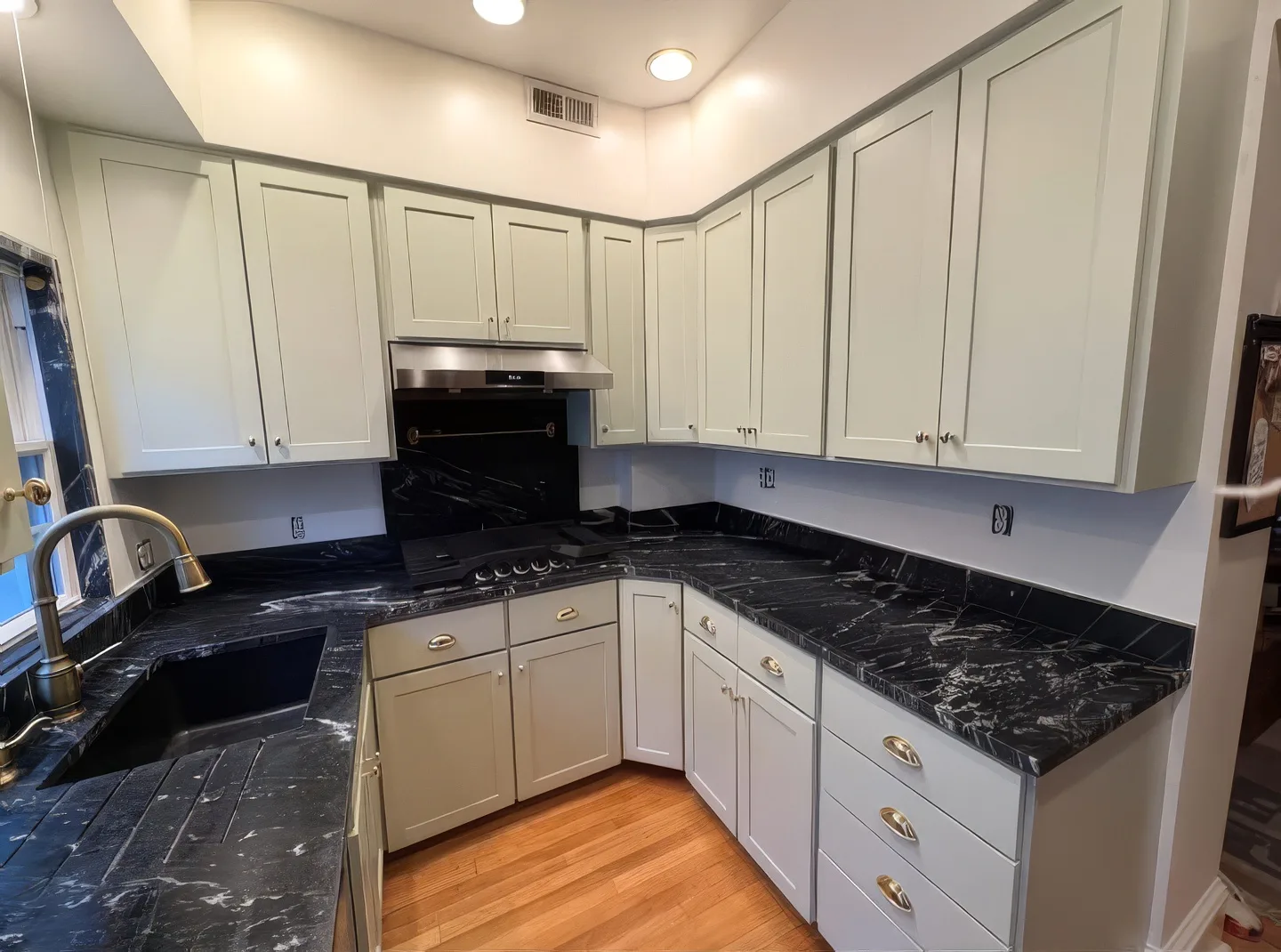
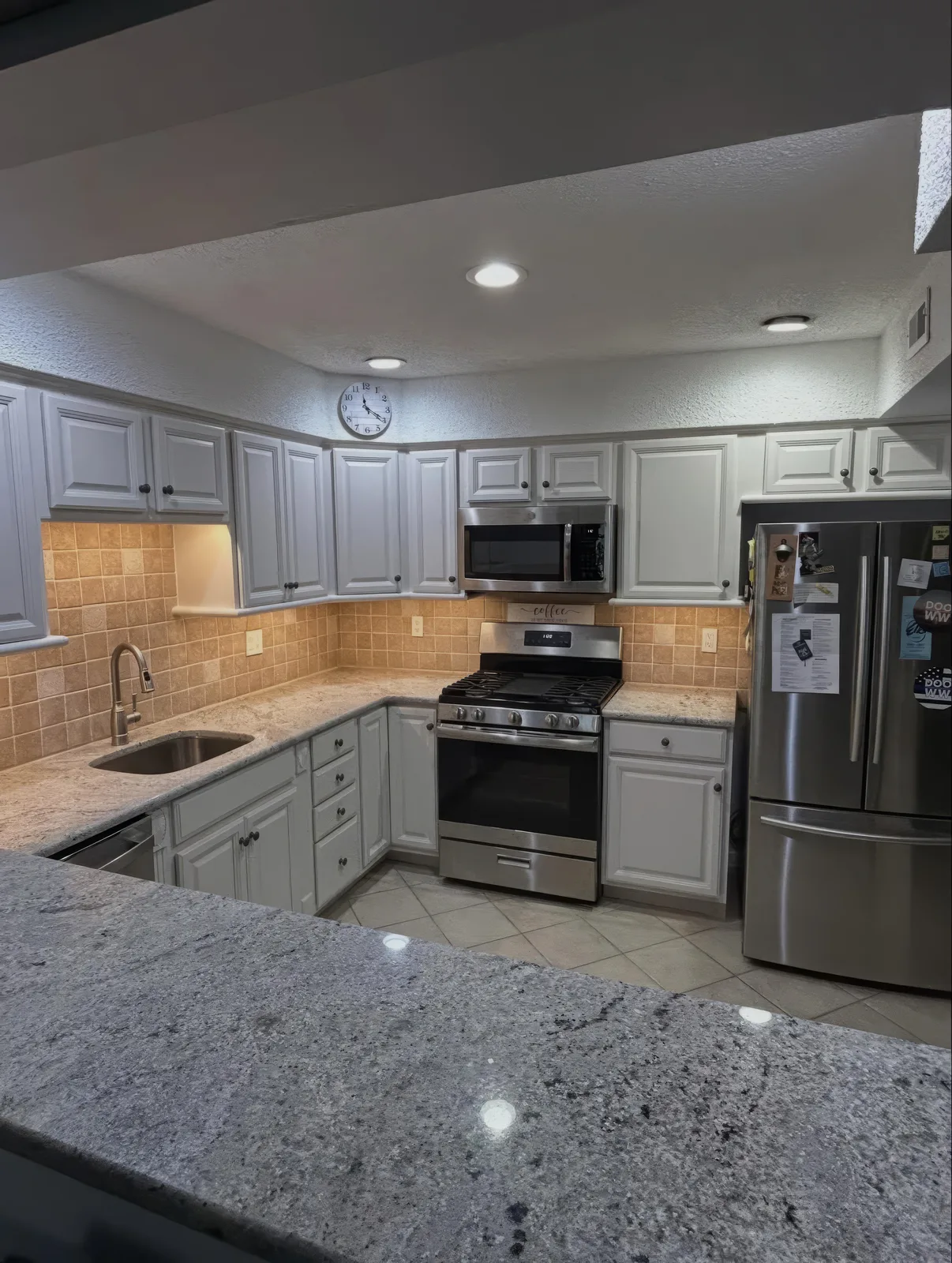
Doors and drawer fronts come off, get labeled, and get finished off site or in a controlled area. Hardware comes off rather than getting taped around. The boxes and face frames get done in place, which means masking the countertops, backsplash, appliances, and floor properly.
Everything gets degreased first. Kitchen cabinets carry a film of cooking grease that no amount of sanding fixes and that will reject a finish. Then sanding, then a bonding primer that grips the existing coating or the bare wood, then the finish coats.
Doors go back on last, with the hardware, once the finish has had time to cure. The kitchen stays usable through most of it.
Staining and varnishing interior wood
Not everything should be painted. Interior wood staining and varnishing covers built-ins, mantels, stair parts, doors, and trim where the customer wants the grain to show.
Stain work is less forgiving than paint, because stain reveals rather than conceals. Sanding has to be even, and any glue residue, filler, or sanding scratch will take stain differently and show up permanently. Softwoods like pine blotch without a conditioner. We work through those steps rather than around them.
Decks, stripping and sealing
A deck in this climate takes sun, rain, snow load, and freeze-thaw all in the same year, which is why deck finishes fail faster than anything else on a property.
Deck staining and sealing starts with getting the old finish off. Failed semi-transparent stain has to be stripped or sanded, because a new coat over a peeling one peels with it. Boards get inspected for rot and soft spots, fasteners get reset, and the surface gets brightened before anything is applied.
Then the finish, matched to the wood and the exposure. A fully sun-exposed south-facing deck and a shaded north-facing one behave differently and should not get the same product.
Fences
Fence staining and painting is straightforward work that mostly comes down to access and cleaning. Pressure washing or soft washing to remove mildew and gray weathered fiber, letting it dry properly, then spraying or brushing depending on the fence style and what is on the other side of it.
Cedar and pressure-treated pine both need to be dry and weathered enough to accept a finish. New pressure-treated fencing especially should not be sealed too early, and we will tell you to wait rather than take the job now and watch it fail.
Wood rot and carpentry repair comes first
This is not an add-on service, it is a prerequisite. Painting over rot buys you a season.
We cut out rotted material and replace it. Trim, casings, corner boards, sills, deck boards, railings, fascia, and porch parts. Where the damage is small and stable, an epoxy consolidation and filler repair is appropriate. Where it is structural or extensive, the piece gets replaced.
Rot always has a cause, and it is almost always water getting in somewhere it should not. Fixing the wood without fixing the source means doing it again in four years, so we look for the source: failed caulk, a bad flashing detail, gutters overflowing onto a fascia, or grade holding water against a post.
Cabinet refinishing against the cost of replacement
The honest comparison is not just the price gap, it is what you get for it.
Refinishing keeps your existing layout, your existing boxes, and your existing hardware locations, and it takes days rather than weeks. It does not fix a bad layout, add storage, or change door style. If what you dislike about your kitchen is the color and the finish, refinishing solves the whole problem. If what you dislike is that the cabinets are in the wrong places, no finish fixes that.
Ed prices the cabinet work in writing and will tell you if he thinks replacement is the better call for your kitchen.
How the Job Runs
- 01
Walkthrough. Ed inspects the boxes, doors, joinery, and hardware and tells you what is worth refinishing.
- 02
Removal and labeling. Doors, drawer fronts, and hardware off and tracked.
- 03
Degrease and sand. Full degrease, then sanding to a uniform surface.
- 04
Prime. Bonding primer suited to the existing finish or bare wood.
- 05
Finish and reassembly. Thin even coats, cure time, then rehang with hardware.
Frequently Asked Questions
How long does a cabinet refinishing job take?+
A typical kitchen runs about five to eight working days depending on the number of doors and the cure time the finish needs. The kitchen stays usable for most of it, since doors are finished off the boxes.
Will refinished cabinets look painted or look factory finished?+
That depends entirely on prep and application. Done properly, with a full degrease, sanding, bonding primer, and thin even coats, they read as a finished surface rather than a painted one. Done fast, they look painted. That is the difference in this trade.
Can you paint thermofoil or laminate cabinets?+
Thermofoil is a poor candidate, because the vinyl skin peels away from the fiberboard underneath and paint does not fix that. Ed will tell you at the walkthrough if your doors fall into that category.
Do you repair wood rot, or just paint over it?+
We repair it. Rotted trim, sills, fascia, deck boards, and porch parts get cut out and replaced, or consolidated with epoxy where the damage is small and stable. We also look for what caused it, because painting over the cause means doing it again.
When can a new deck or fence be stained?+
New pressure-treated lumber usually needs several months to dry and weather enough to accept a finish. Sealing too early traps moisture and the finish fails. We will tell you to wait rather than take the money now.
Do you strip old deck stain or just recoat?+
Strip or sand, in almost every case. A new coat over a peeling one peels off with it. Getting the failed finish off is most of the work on a deck job.